Wednesday, 8 May 2013

Tuesday, 9 April 2013
Film - The Glass Wall
Here is our production piece for this year. It's called 'The Glass Wall', with no relation to the 1953 film of the same name.
Feminism

Feminism means different things to different people. The words feminism and feminist have negative connotations to many, and in some cases, these connotations are not unfounded. However, personally I believe that feminists are treated too harshly in the media and in general. It seems to me that the negative attitude toward feminists originates in confusion concerning the definition of the term 'feminism'.
Google defines feminism as:
'The advocacy of women's rights on the grounds of political, social, and economic equality to men.'
Most people in my experience however, believe feminists to be men-hating, malicious extremists, often using the term 'feminazi' when referring to feminists, a term coined by Rush Limbaugh. I think these people are pretty stupid though.
Wiktionary has this to say about the term:
'Limbaugh has defined the term as "a feminist to whom the most important thing in life is ensuring that as many abortions as possible occur." adding that, "There are fewer than twenty-five known Feminazis in the United States."However, in practice he and others use the term in a much wider context.

I don't know how you get from equal rights to abortions, but it's not all that surprising coming from a Republican. That last sentence should really tell you all you need to know about Limbaugh and feminism, there may be some irrational extremists, as there are with all politcal and societal groups, but using that term as a broad reference to all feminists is a dick move. After doing some research, this Limbaugh character is racist as well as supporting capital punishment, so he's not the greatest role model out there.
I'm going to move past Rush Limbaugh now, because the more I read about him the more I dislike him, and this post is about feminism, not some idiot American talk-show host.
Let's talk about someone who I actually agree with (to a point), Anita Sarkeesian. You may already have heard of her, Sarkeesian makes feminist videos describing the role of female characters in the media today. Her videos are pretty interesting, she runs the Youtube series 'Feminist Frequency'.

It seems you can't talk about Feminist Frequency, or Anita Sarkeesian, without mentioning the severe amount of trolling and vandalism her wikipedia page and other related sites endured after she announced a kickstarter campaign for a video series titled 'Tropes versus Women'. It was a typically petty and despicable attack, resulting only really in a massive loss of ground for any counter-argument to Sarkeesian's opinions on popular culture. While I don't agree with everything she says, (I think she goes too far sometimes when defining some things she considers sexist) I do appreciate her perspective and find her videos entertaining enough. Of course instead of arguing their case, whatever that was, those who acted against her chose the idiotic reaction to a difference of opinion.

Tuesday, 12 March 2013
Post-Modernism, more like Toast-Codernism

Ready to work
Post-Modernism in Pulp Fiction
Does PF refer to other films?
PF refers to John Travolta’s previous debut
work in film by having his character, Vincent, dance with Mia in a dancing
competition at Jack Rabbit Slims. It also references the Marilyn Monroe film,
‘The Seven Year Itch’, by having the waitress who was dressed as Monroe
re-enact the famous skirt-blowing scene from that movie.
Does it refer to other texts of popular
culture?
All of the lookalike staff at Jack Rabbit
Slims dress and ‘act’ like various pop culture icons, specifically from the
time in which the bar is themed, the 1950’s.
What different genres does PF play upon or
mix?
PF could be said to hold the features of a
gangster film, a musical, a romance, a buddy cop movie and also a comedy. In
some ways the film merges elements of all of these genres.
How does PF mix elements of high and low
culture?
PF mixes high culture and low culture
elements mostly in the portrayal of Mia’s character, from the moment Vincent
enters her house and she speaks to him from the intercom and then watches him
on the CCTV system as he walks around her art-filled house, she is shown to be
a very wealthy woman. The narrative tells us that she is married to a powerful
and well-respected gangster, and so it would seem that she could dine anyplace
she wants to, and yet she chooses to go to a cliché 50’s-retro-themed diner.
Mia is arguably a high culture character that enjoys low culture things.
What is the effect Mia magically drawing a
square on the screen?
Mia magically drawing a square on the
screen brings the viewer out of the filmic world and supports the
self-reflexive nature of the movie.
What is the effect of giving such a number
of characters equal screen time?
Giving so many characters equal screen time
further develops and emphasises the idea that Pulp Fiction is a series of
separate stories that intertwine and relate to one another in obscure ways.
More work?
Post-Modernism in our text
Does our film refer to other films?
Although heavily inspired by 'Welcome to the N.H.K', our film doesn't really refer to other films, I have had ideas about possibly integrating one or two references, and as our footage-gathering sessions have not yet ceased, references could be included. If they are, I will make a post about them on the blog.
Does our film refer to pop culture texts?
Again, any pop culture references made are likely accidental unless stated otherwise later on in the blog.
Do we play on different genres, and/or mixing them?
Our film is so heavily-steeped in the 'Indie', self-reflexive, pretentious genre that mixing is basically not possible, at least not in the 4-5 minute runtime we've been allocated.
In what way, if applicable, does our film mix elements of high and low culture?
High and low culture representations in the film are really just coincidental, we film what we can with what we have, we're not making too many statements separate from the narrative and cinematography. We just don't have the resources to specify the entirety of the filming situation.
Does our film refer to other films?
Although heavily inspired by 'Welcome to the N.H.K', our film doesn't really refer to other films, I have had ideas about possibly integrating one or two references, and as our footage-gathering sessions have not yet ceased, references could be included. If they are, I will make a post about them on the blog.
Does our film refer to pop culture texts?
Again, any pop culture references made are likely accidental unless stated otherwise later on in the blog.
Do we play on different genres, and/or mixing them?
Our film is so heavily-steeped in the 'Indie', self-reflexive, pretentious genre that mixing is basically not possible, at least not in the 4-5 minute runtime we've been allocated.
In what way, if applicable, does our film mix elements of high and low culture?
High and low culture representations in the film are really just coincidental, we film what we can with what we have, we're not making too many statements separate from the narrative and cinematography. We just don't have the resources to specify the entirety of the filming situation.
Magazine Film Reviewaskewniverse DRAFT
I think that posting a draft of our magazine review is dull, boring, and a bad idea. But everyone else disagrees so whatever.
Check it.

Check it.

Target Audience - The Socially Anxious (nerds, mostly)
As with our first project, the target audience for our production piece is very similar to ourselves. Our film is heavily inspired by Tatsuhiko Takimoto's 'Welcome to the N.H.K', in particular, the anime adaption. We'll detail 'Welcome to the N.H.K' in a separate blog post, what's important to take note of is that it features a socially anxious protagonist, known as a 'hikikomori'. 'Hikikomori' is a Japanese term, literally meaning, 'pulling inward, being confined', it refers to adolescents and young adults who withdraw from society and social life, becoming recluses who spend all of their time in their homes. Technically, the term applies to anyone who spends over 6 months withdrawn from society in their home, who refuses to leave.
Although originating in Japan, cases of hikikomori behaviour have been reported in other, more western countries. While Jonathan and I are not hikikomoris, hikikomori behaviour is an extension of social anxiety, and that is something that we both know all too well. I'll explain what social anxiety is briefly, just to provide some background if you're unfamiliar with it.

Social anxiety is a feeling of insecurity and generally, fear, associated with social situations. It is a fairly common condition affecting adolescents, which occasionally develops into a chronic disorder. I'd say that everyone experiences social anxiety to some degree, if we didn't then everybody would be carefree all the time, talking to anybody and everybody without hesitation. Some psychologists speculate that social anxiety, and to a greater extent, stress, is directly related to our natural survival instincts; feelings which trigger biological responses designed to decrease the risk of a perceived threat. Logic would dictate that our minds are perceiving modern day 'threats', and our bodies are reacting as instinct tells them to.
It is generally believed that people who express hikikomori behaviour do so because the anxiety surrounding social situations overwhelms them. In Japan, the education system is much more intense, creating a 'pressure cooker' scenario for youths, this stress can push the youth to reclusive tendencies, eventually resulting in a complete withdrawal from society. The education system over here in Britain is much less intense, however still has many 'examinations', 'mark schemes', and so forth; in other words, students living in the UK are required to submit a lot of work, and when they are not producing coursework, they will be expected to 'revise their subject knowledge' for exams, this means that they have a reduced amount of free time, and an enormity of expectations and stresses placed upon them. I think that anyone who has been through the system, even just the latter years of comprehensive school, and not sixth form or university, will empathise with the feeling of just walking away from all of the responsibilities placed upon them. The difference between Japan and Britain is that there is an increased focus on the shame of academic failure in Japan, whereas British society is not quite as competitive.
Our production piece features a social recluse, a British hikikomori of sorts. We were inspired by Welcome to the N.H.K, when we watched the anime adaption, we were able to relate to the protagonist's anxiety, and that made the whole experience much more immersive and meaningful. Because of this, our target audience is again, people similar to us, not necessarily 'nerdy' people, but people who are socially anxious. Also people who know Welcome to the N.H.K.

Although originating in Japan, cases of hikikomori behaviour have been reported in other, more western countries. While Jonathan and I are not hikikomoris, hikikomori behaviour is an extension of social anxiety, and that is something that we both know all too well. I'll explain what social anxiety is briefly, just to provide some background if you're unfamiliar with it.
Social anxiety is a feeling of insecurity and generally, fear, associated with social situations. It is a fairly common condition affecting adolescents, which occasionally develops into a chronic disorder. I'd say that everyone experiences social anxiety to some degree, if we didn't then everybody would be carefree all the time, talking to anybody and everybody without hesitation. Some psychologists speculate that social anxiety, and to a greater extent, stress, is directly related to our natural survival instincts; feelings which trigger biological responses designed to decrease the risk of a perceived threat. Logic would dictate that our minds are perceiving modern day 'threats', and our bodies are reacting as instinct tells them to.
It is generally believed that people who express hikikomori behaviour do so because the anxiety surrounding social situations overwhelms them. In Japan, the education system is much more intense, creating a 'pressure cooker' scenario for youths, this stress can push the youth to reclusive tendencies, eventually resulting in a complete withdrawal from society. The education system over here in Britain is much less intense, however still has many 'examinations', 'mark schemes', and so forth; in other words, students living in the UK are required to submit a lot of work, and when they are not producing coursework, they will be expected to 'revise their subject knowledge' for exams, this means that they have a reduced amount of free time, and an enormity of expectations and stresses placed upon them. I think that anyone who has been through the system, even just the latter years of comprehensive school, and not sixth form or university, will empathise with the feeling of just walking away from all of the responsibilities placed upon them. The difference between Japan and Britain is that there is an increased focus on the shame of academic failure in Japan, whereas British society is not quite as competitive.
Our production piece features a social recluse, a British hikikomori of sorts. We were inspired by Welcome to the N.H.K, when we watched the anime adaption, we were able to relate to the protagonist's anxiety, and that made the whole experience much more immersive and meaningful. Because of this, our target audience is again, people similar to us, not necessarily 'nerdy' people, but people who are socially anxious. Also people who know Welcome to the N.H.K.
Semiotics and Serial Killers
Semiotics, the tradition of calling attention to formal structures of significance. Whatever that means.
Semiotics, semiotic studies or semiology was first developed by a Swiss linguist known as Ferdinand de Saussure. Or at least, what we would consider semiology was developed by Saussure. Semiotics is the study of signs and their related meanings. As we perceive the environment around us, we apply significance and meaning to it. Saussure found this interesting as he believes that language is 'central' to our understanding of the world around us. In this way, the language of semiotics could be said to be signs or signifiers.

Take for example, this rose. Of course the first thing to realise is that it is not an actual rose, but rather an image of a rose that I stole from Google images. The image of a rose is a significant one to western culture, it symbolises love and romance. I could probably do some research and find the origins of this connection, but honestly it doesn't matter. What matters is that you saw this rose, and you probably thought of the same things that everyone else would. If you're a crazy person, like Jonathan, roses mean death. This is also a notable connotation of the rose image; in the media, we're shown numerous killers leaving roses on their victims as a kind of 'calling card'. This subverted origin of significance is a classic narrative tactic to explain the character and also screw with the audience.
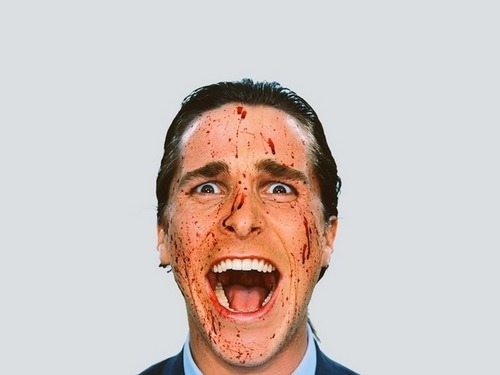
What do you think about a person who leaves a rose on a corpse, or gives someone a rose and then kills them? That they're deranged, most likely, that they have romantic notions concerning their immoral activities. It's saying, "Look at this guy! He's so far removed from our established understanding of how people should be, from our own behavioural and moral codes, that he is to be feared enormously". People fear what they do not understand, what is dissimilar to what they know might be dangerous. It's a natural survival instinct, it's the reason that we trust our friends and those we're familiar with, and not anybody else. It could be argued that this instinctual behaviour is also the origin of racism, homophobia and all other forms of prejudice-based hate.
Filmmakers and media producers in general know this, at least to some extent, and then they use that knowledge to form a compelling story. Charles Sanders Pierce, an American philosopher, also did some work on semiotics.
Subscribe to:
Posts (Atom)